
Mutual Funds Explained: A Complete Beginner's Guide to Investing in Mutual Funds
Learn how Mutual Funds work, the different types available, their benefits and risks, fees to consider, and practical strategies for building long-term wealth through professionally managed investments.

Disclosure: Ads are displayed on this site. The information provided is for educational purposes only and should not be considered financial or investment advice.
Key Takeaways
- What Are Mutual Funds? — Learn the basics of professionally managed investment funds.
- Benefits of Mutual Funds — Understand why millions of investors choose mutual funds.
- How Mutual Funds Work — Learn how fund managers invest your money.
- Types of Mutual Funds — Explore equity, bond, balanced, money market, and index funds.
- Mutual Fund Fees — Understand expense ratios and management fees.
- Risks of Mutual Funds — Learn the potential risks before investing.
- How to Start Investing — Simple steps for beginners.
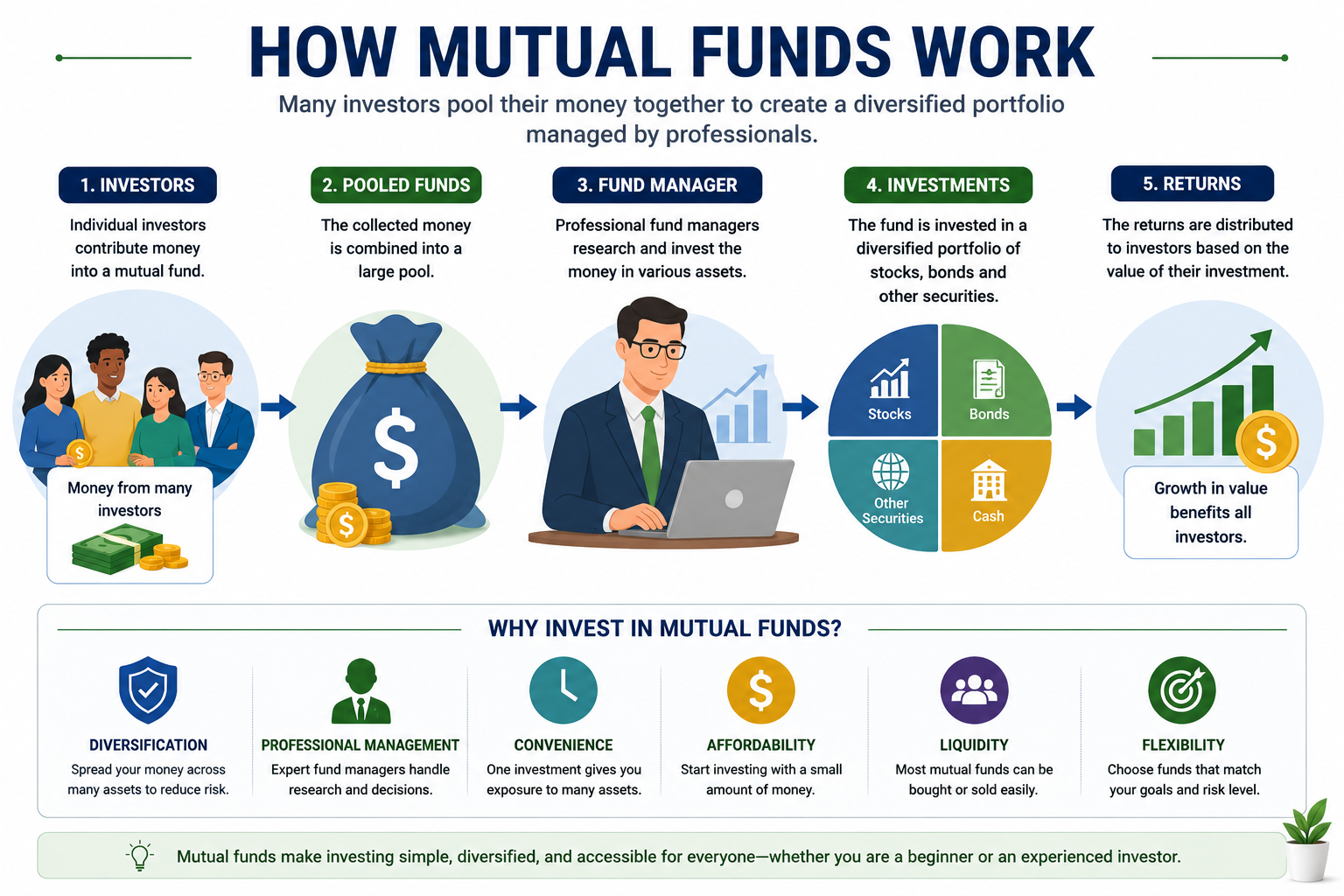
Mutual funds are among the world's most popular investment vehicles because they allow individuals to pool their money with thousands of other investors. Professional fund managers then invest the combined money in a diversified portfolio of stocks, bonds, or other securities.
Instead of researching and purchasing dozens of individual investments, investors can buy a single mutual fund that provides instant diversification and professional management. This makes mutual funds particularly attractive to beginners and long-term investors.
At Go-Superscribe, we simplify investing by providing practical, easy-to-understand guides that help readers make informed financial decisions. Whether you're saving for retirement, building wealth, or investing for future goals, understanding mutual funds is an important step in your investing journey.
What Are Mutual Funds?
A mutual fund is a professionally managed investment fund that pools money from many investors to purchase a diversified portfolio of assets. These assets may include stocks, bonds, government securities, money market instruments, or a combination of investments.
Every investor owns shares of the mutual fund rather than directly owning the individual investments inside the portfolio. As the value of the investments changes, the value of your mutual fund shares also changes.
Professional fund managers make investment decisions on behalf of investors by selecting securities, monitoring market conditions, and adjusting the portfolio according to the fund's objectives.
Benefits of Mutual Funds
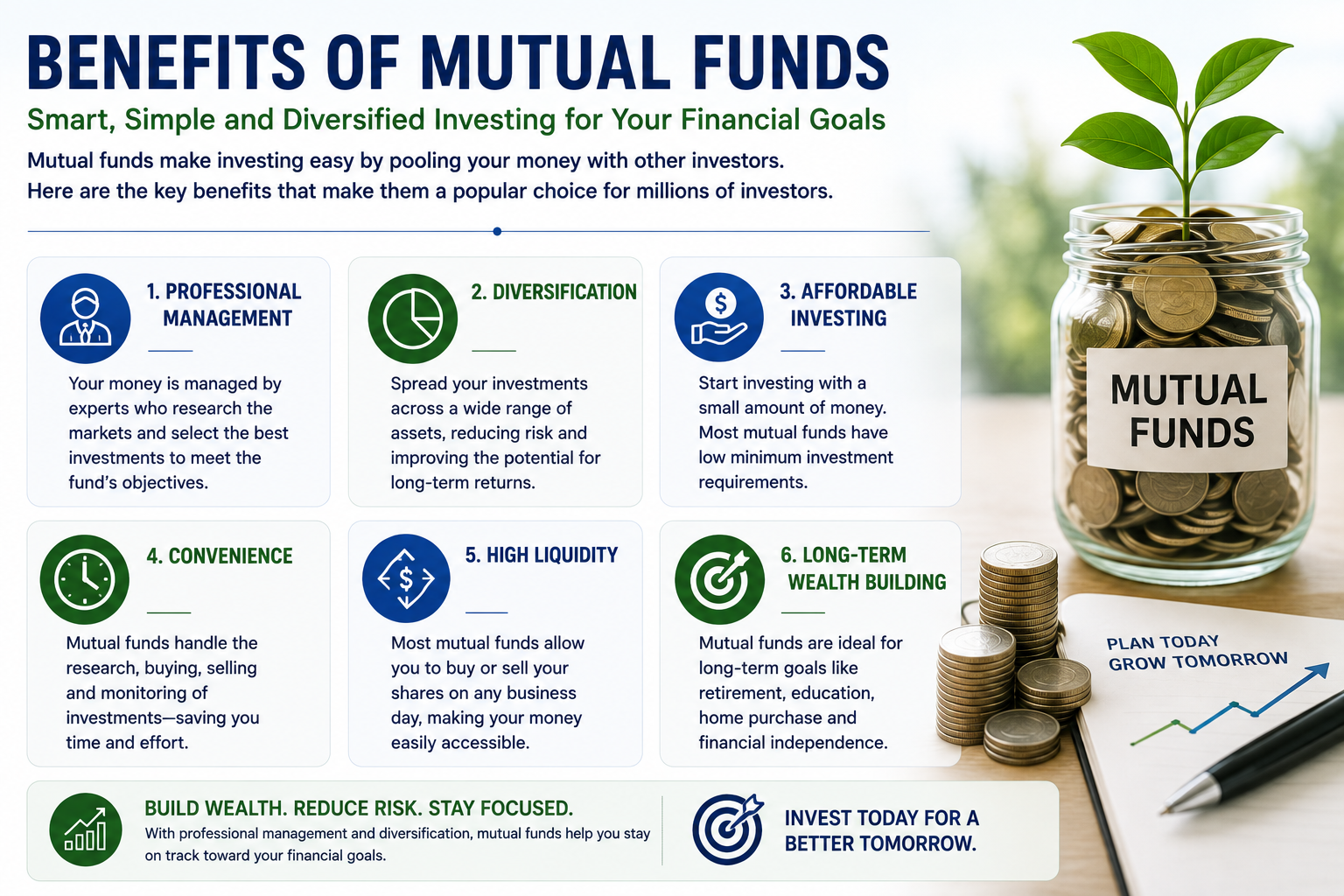
Mutual funds have become one of the most popular investment options worldwide because they provide investors with access to professionally managed, diversified portfolios. Whether you are a beginner or an experienced investor, mutual funds offer a convenient way to participate in financial markets without having to select individual securities yourself.
Rather than purchasing dozens of different investments separately, a single mutual fund can provide exposure to hundreds or even thousands of securities. This diversification helps spread investment risk while simplifying portfolio management.
Key Benefits
- Professional portfolio management
- Instant diversification across multiple investments
- Affordable investment with relatively small starting amounts
- Convenient long-term investing
- High liquidity in most mutual funds
- Suitable for retirement and wealth-building goals
How Mutual Funds Work
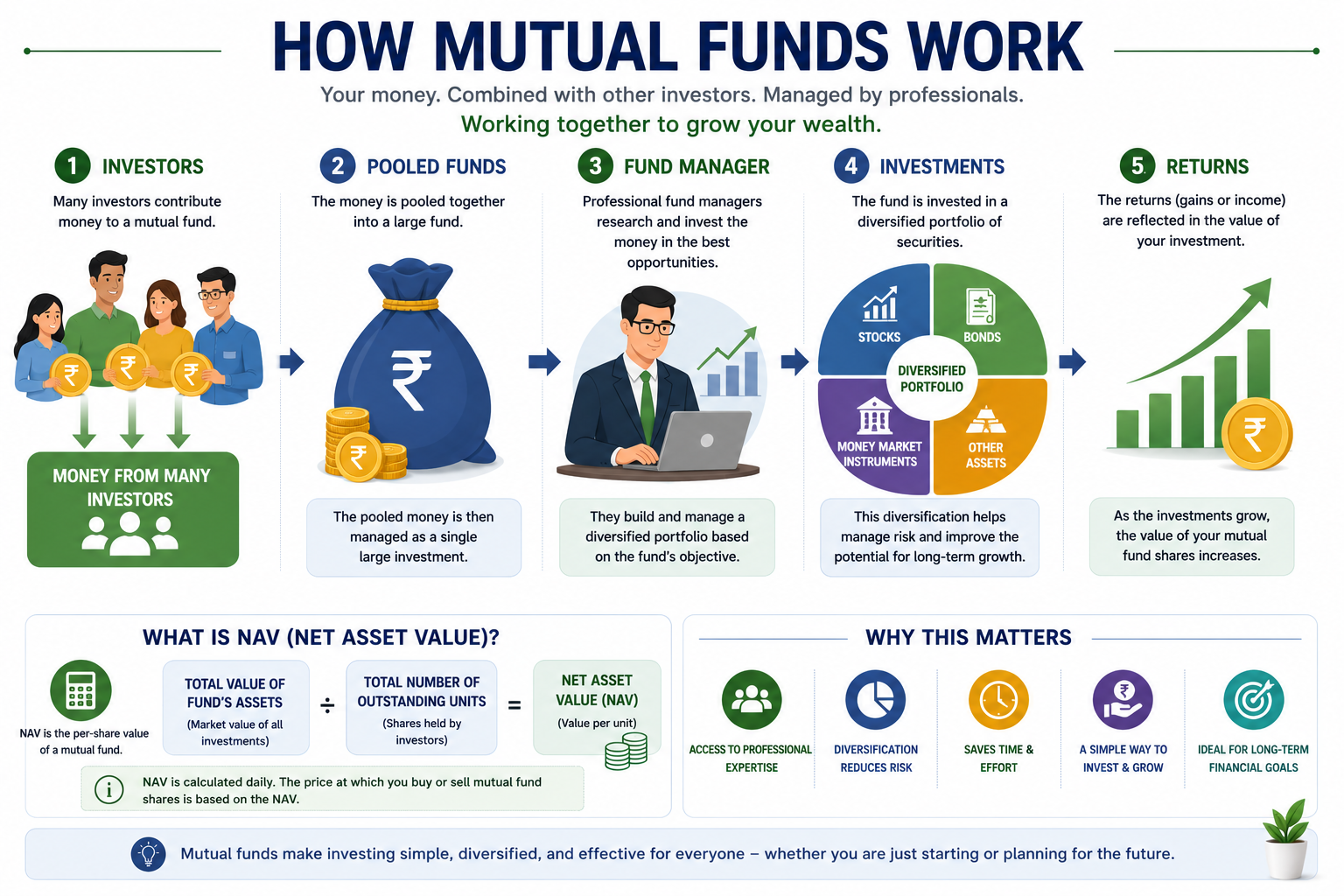
A mutual fund collects money from thousands of investors and combines it into one large investment pool. Professional fund managers then invest this money according to the fund's stated investment objective.
For example, an equity mutual fund invests primarily in company stocks, while a bond mutual fund focuses on government and corporate bonds. Balanced funds combine both stocks and bonds to provide diversification.
Each investor owns units or shares of the mutual fund. As the investments inside the portfolio increase or decrease in value, the value of each investor's shares changes accordingly.
The Investment Process
- Investors purchase mutual fund shares.
- The money is pooled together.
- Professional fund managers invest the money.
- The portfolio earns gains or losses.
- Returns are reflected in the fund's Net Asset Value (NAV).
What Does a Fund Manager Do?
Every actively managed mutual fund is overseen by one or more professional fund managers. Their responsibility is to research investment opportunities, monitor financial markets, manage risk, and adjust the portfolio to achieve the fund's investment objectives.
Fund managers analyze companies, industries, economic trends, and market conditions before deciding which investments to buy, hold, or sell. Their expertise helps investors who may not have the time or knowledge to manage investments themselves.
Responsibilities of a Fund Manager
- Research investment opportunities
- Build diversified portfolios
- Monitor market performance
- Manage investment risks
- Buy and sell securities
- Maintain the fund's investment strategy

Types of Mutual Funds
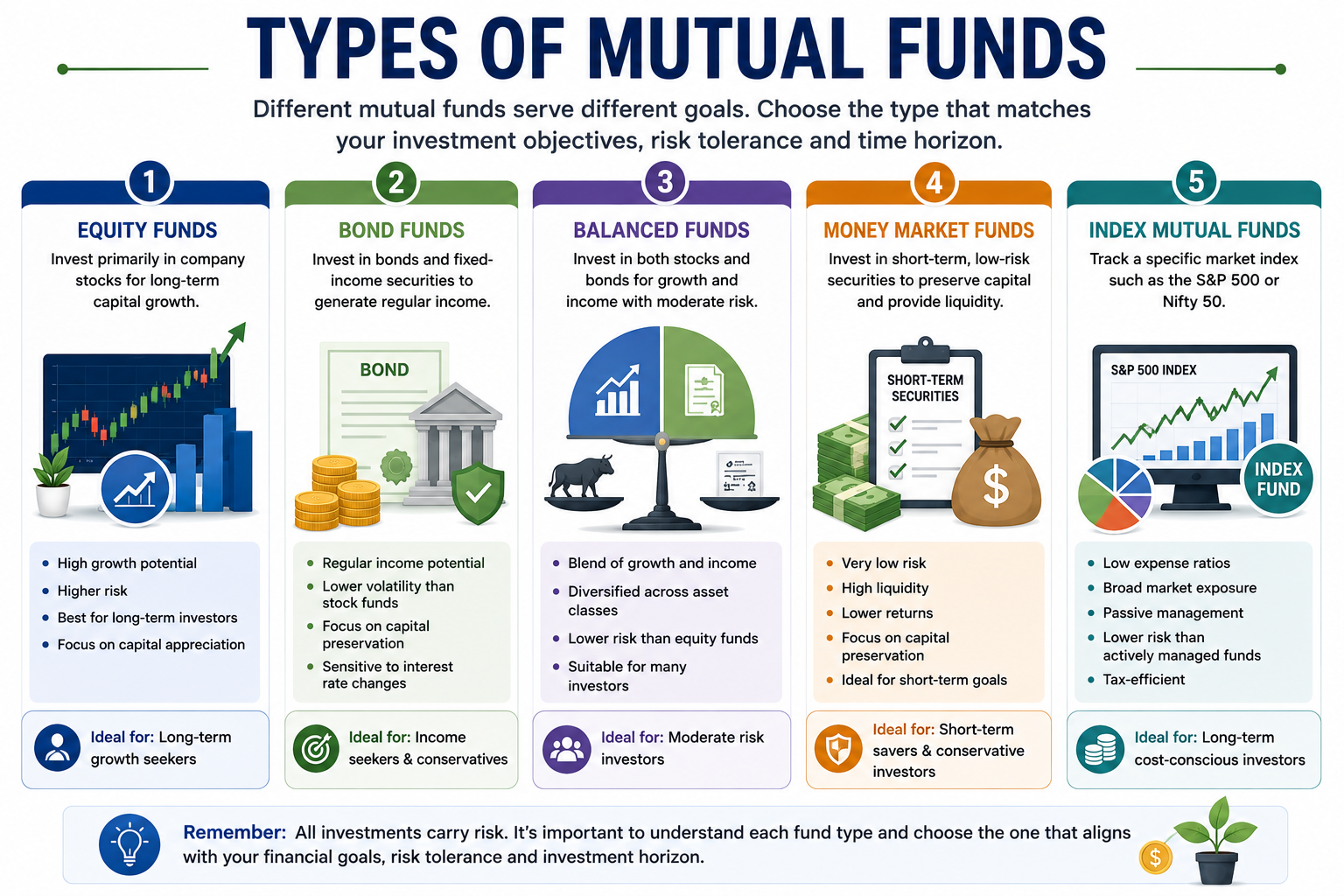
Mutual funds are available in many different categories, each designed to meet specific investment objectives and risk levels. Some focus on long-term growth, while others emphasize income, capital preservation, or balanced investing.
Understanding the major types of mutual funds helps investors select funds that align with their financial goals, investment horizon, and tolerance for risk.
The Main Types of Mutual Funds
- Equity Funds
- Bond Funds
- Balanced Funds
- Money Market Funds
- Index Mutual Funds
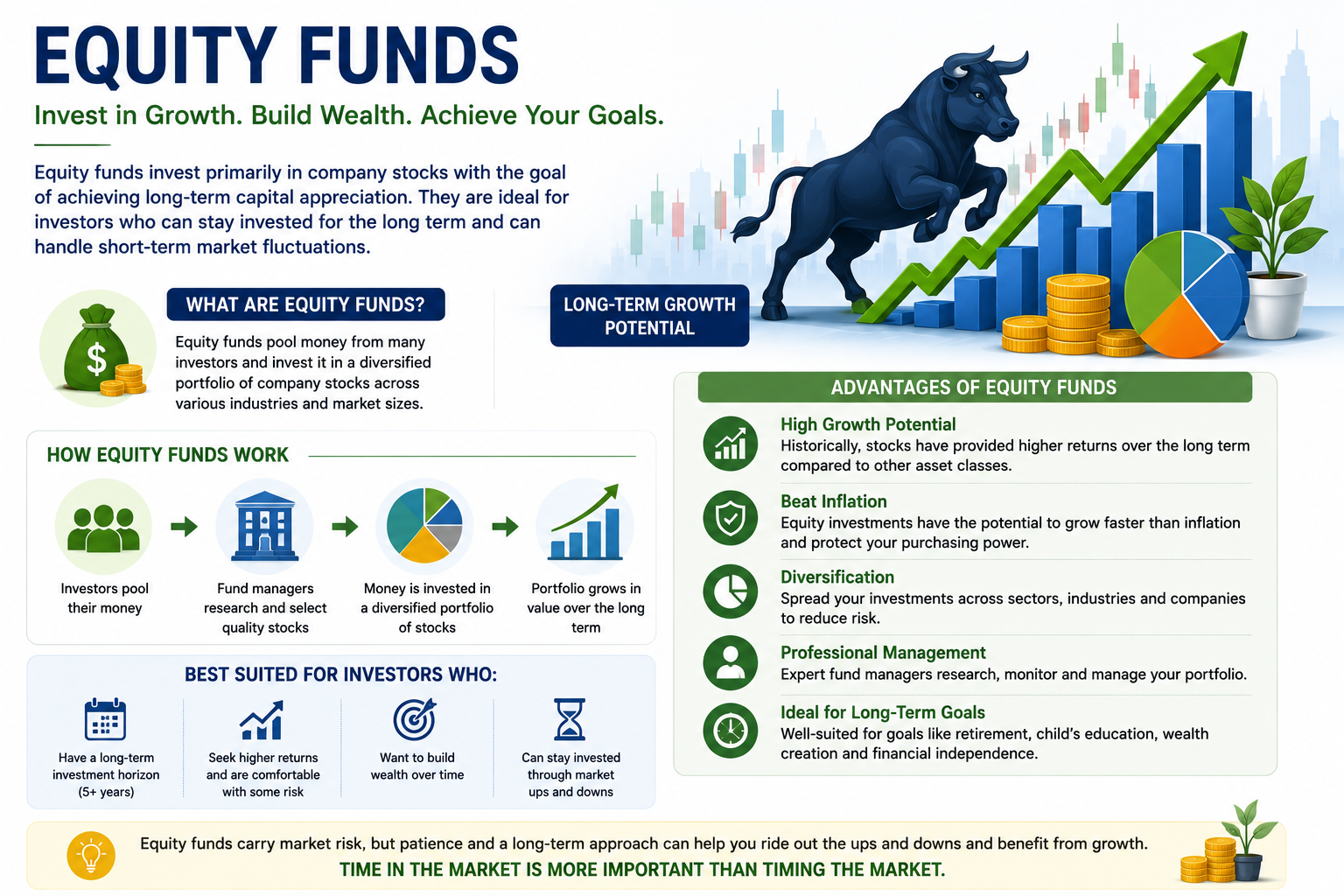
Equity Funds
Equity funds primarily invest in company stocks and are designed for long-term capital growth. Because stock prices fluctuate, equity funds generally carry higher risk than bond or money market funds, but they also offer greater potential returns over time.
Many equity funds focus on specific industries, company sizes, or geographic regions, allowing investors to tailor their portfolios to different investment strategies.
Advantages of Equity Funds
- Strong long-term growth potential
- Professional stock selection
- Broad diversification
- Suitable for long-term investors
- Potential protection against inflation over time
Bond Funds
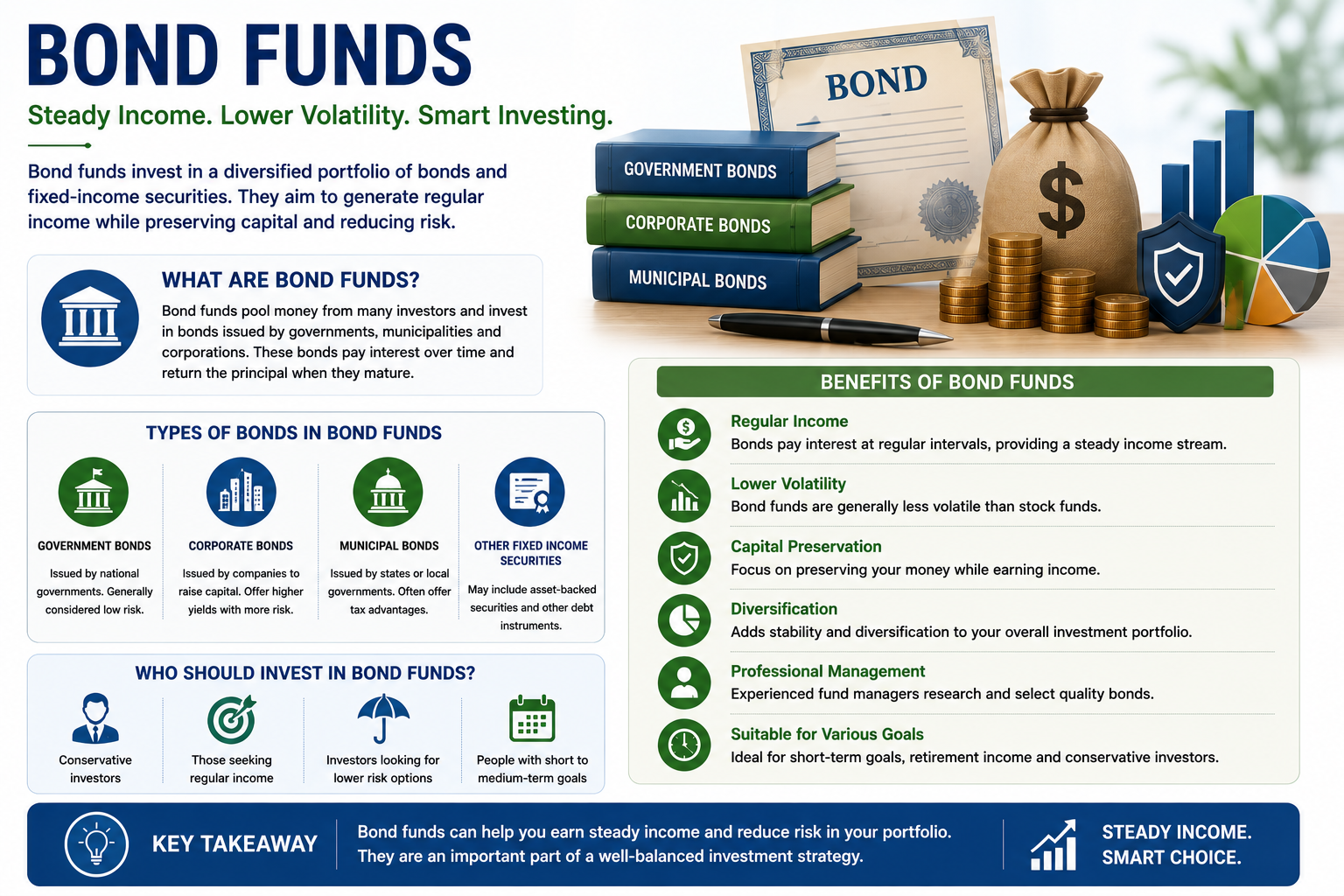
Bond funds invest primarily in government bonds, municipal bonds, and corporate bonds. Their primary objective is to generate regular income while helping reduce overall portfolio volatility.
Although bond funds generally experience less price fluctuation than stock funds, they remain sensitive to interest rate changes and credit risk.
Benefits of Bond Funds
- Regular income potential
- Lower volatility than many stock funds
- Portfolio diversification
- Professional bond management
- Suitable for conservative investors
Balanced Funds
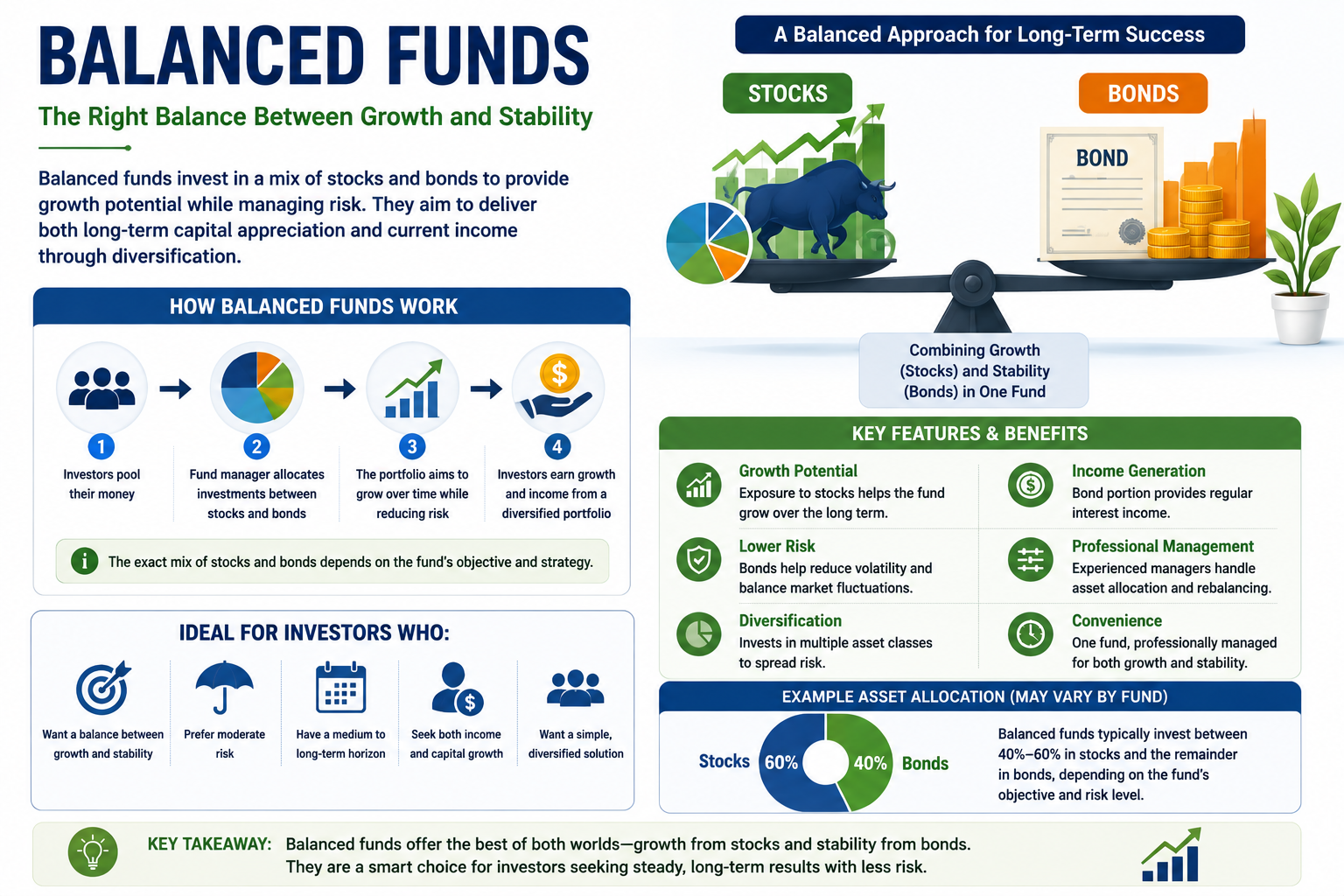
Balanced funds invest in a combination of stocks and bonds. Their objective is to provide both long-term growth and current income while reducing risk through diversification across different asset classes.
Because balanced funds spread investments across multiple asset types, they are often recommended for investors seeking a moderate level of risk.
Why Investors Choose Balanced Funds
- Combination of growth and income
- Diversified portfolio
- Lower volatility than stock-only funds
- Automatic asset allocation
- Suitable for many long-term investors
Money Market Funds
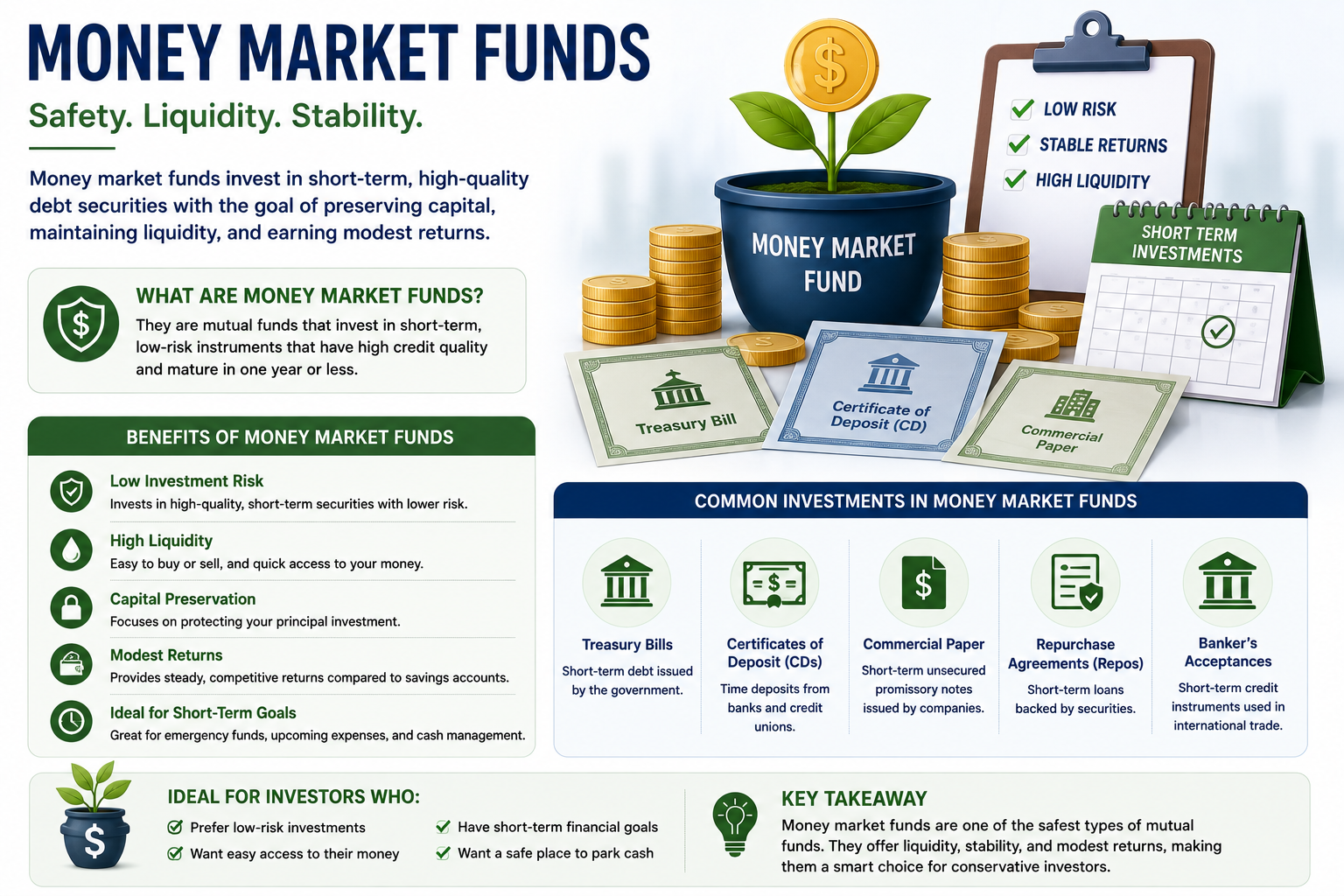
Money market funds invest in short-term, high-quality debt securities such as Treasury bills, certificates of deposit (CDs), and commercial paper. Their primary objective is to preserve capital while generating modest returns with relatively low risk.
Although money market funds generally offer lower returns than stock or bond funds, they provide greater stability and liquidity, making them suitable for emergency savings, short-term financial goals, or investors who prefer conservative investments.
Benefits of Money Market Funds
- Low investment risk
- High liquidity
- Capital preservation
- Easy access to cash
- Suitable for short-term investing
Index Mutual Funds
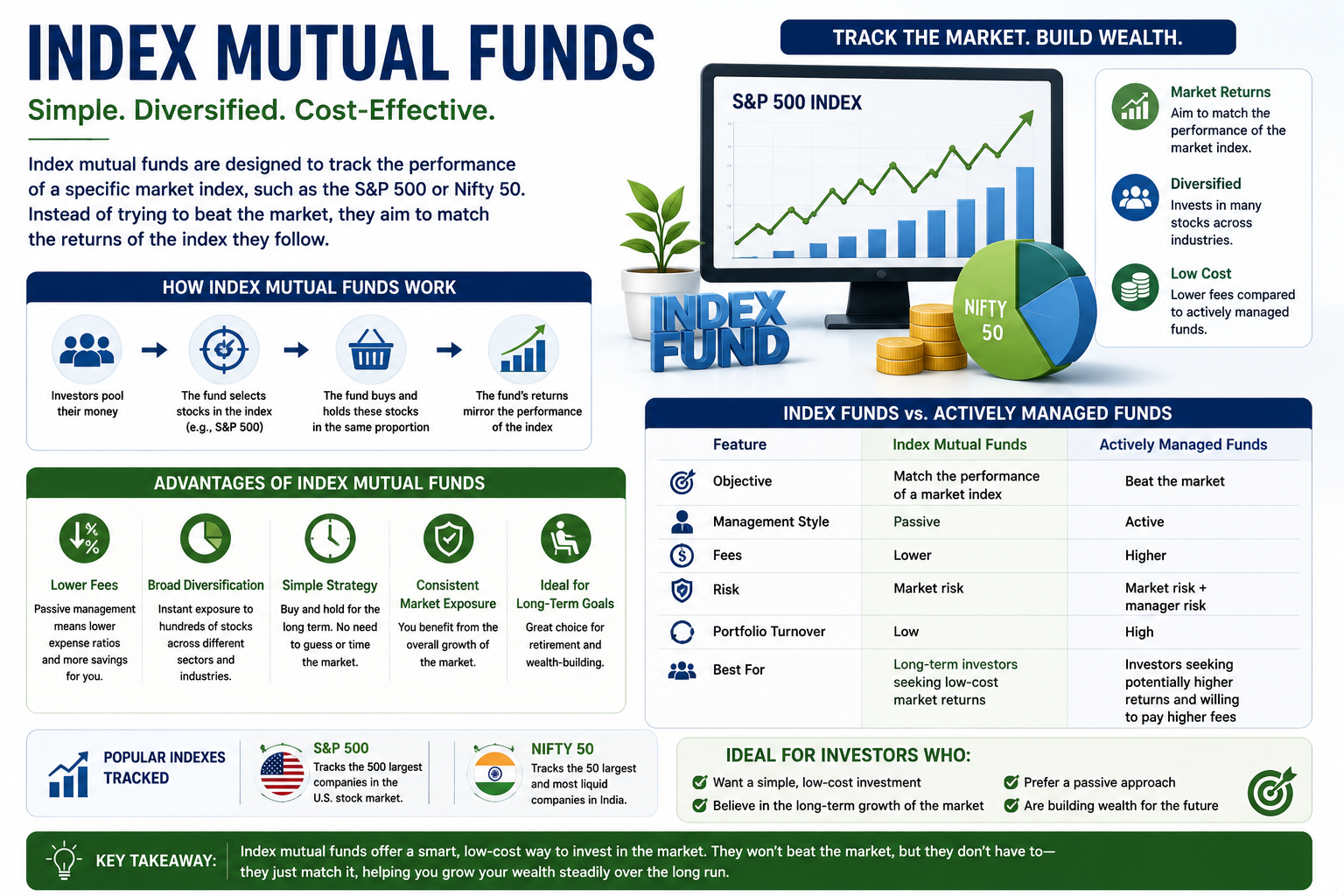
Index mutual funds are designed to track the performance of a specific market index, such as the S&P 500 or the FTSE 100. Instead of trying to outperform the market, these funds aim to closely match the performance of the index they follow.
Because index funds require less active management, they usually have lower fees than actively managed mutual funds. Their combination of diversification, simplicity, and low costs has made them one of the most popular investment choices for long-term investors.
Advantages of Index Mutual Funds
- Lower management fees
- Broad market diversification
- Simple long-term investment strategy
- Consistent market exposure
- Suitable for retirement investing
Understanding Mutual Fund Fees
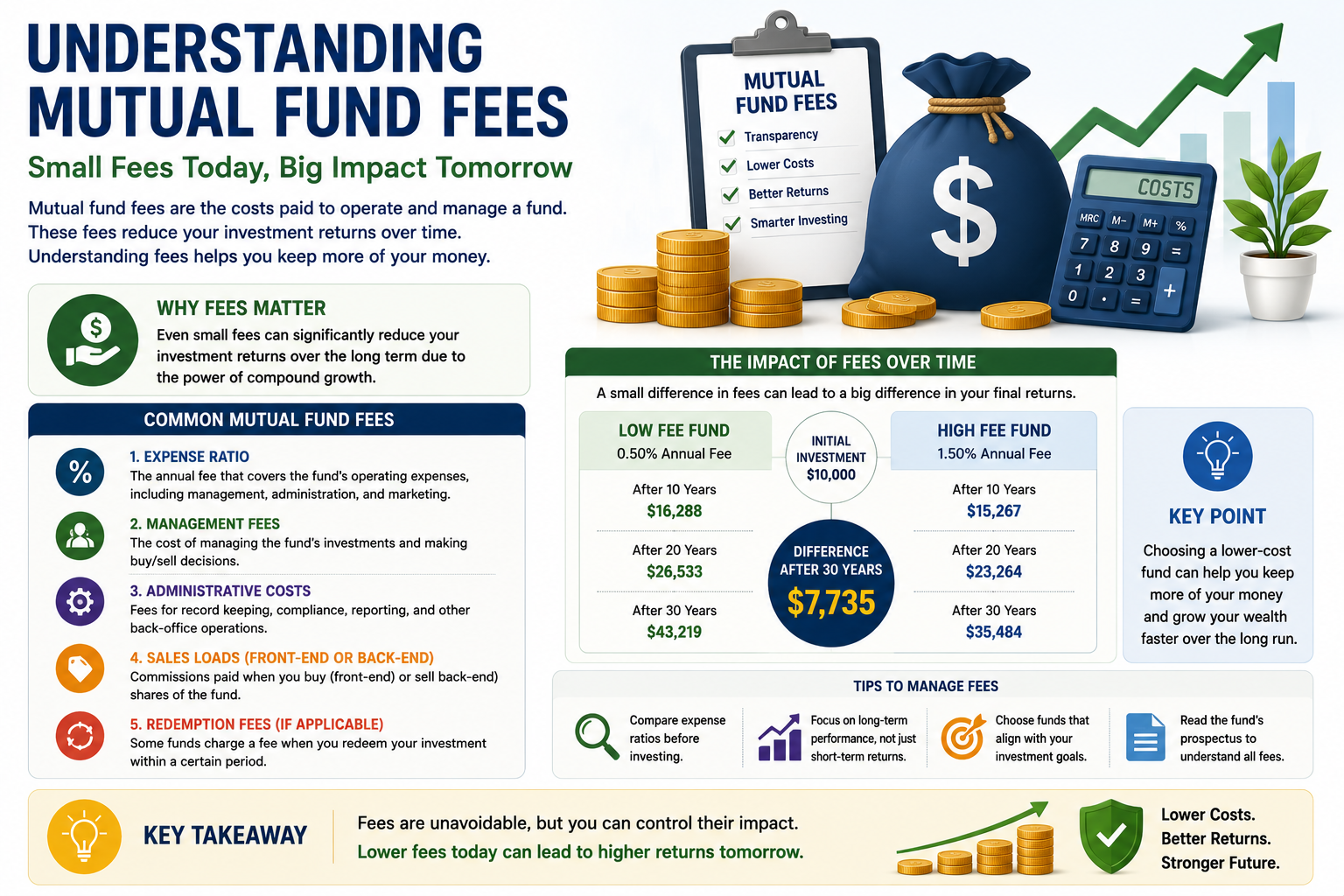
Every mutual fund charges certain fees to cover the costs of managing and operating the fund. While these fees may appear small, they can significantly affect long-term investment returns due to the power of compound growth.
Before investing, it is important to compare fees among similar funds. Lower-cost funds allow investors to keep more of their investment returns over time.
Common Mutual Fund Fees
- Expense Ratio
- Management Fees
- Administrative Costs
- Sales Loads (Front-End or Back-End)
- Redemption Fees (when applicable)
Always review a fund's prospectus to understand the costs involved before making an investment decision.
Understanding the Risks of Mutual Funds
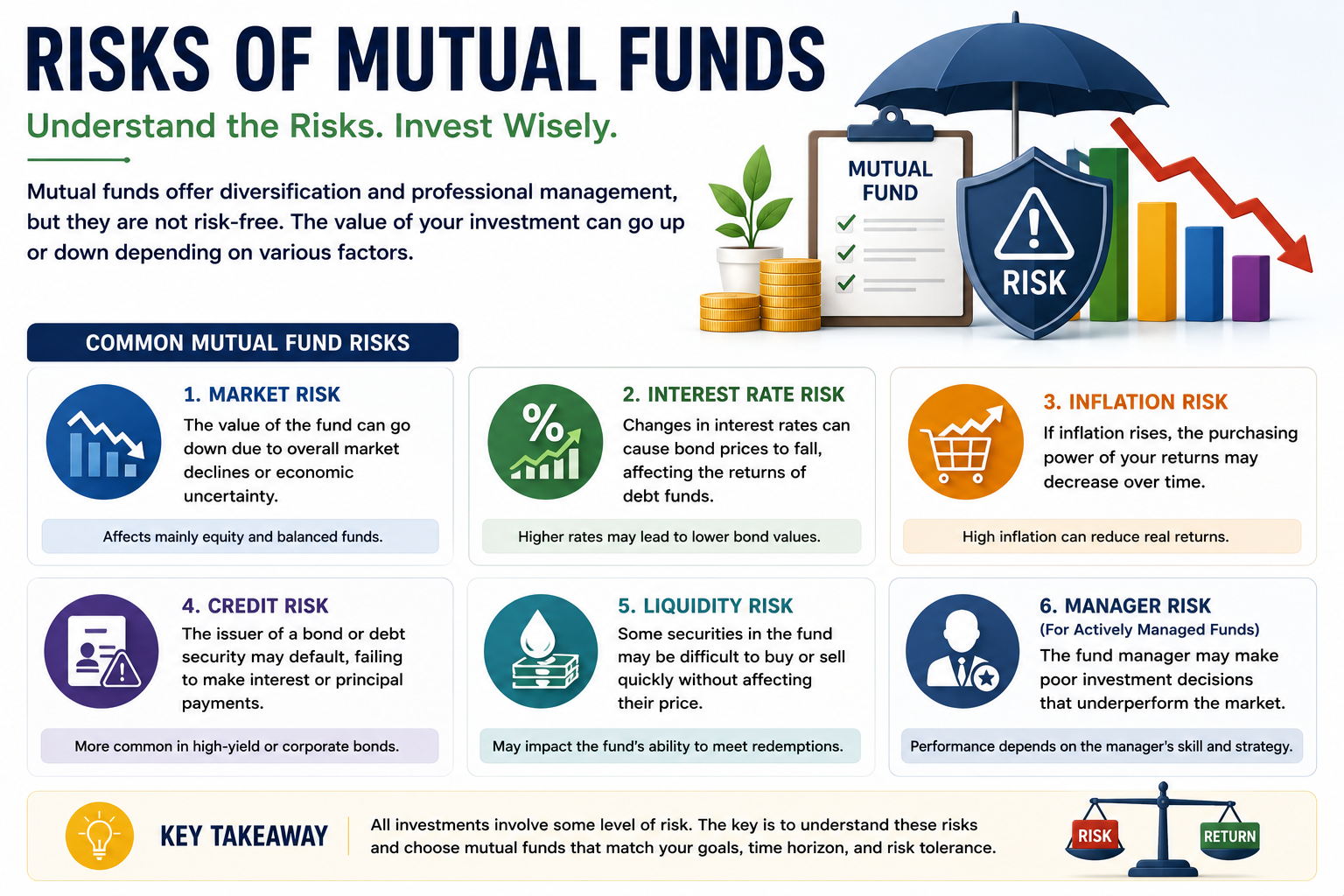
Although mutual funds offer diversification and professional management, they are not risk-free investments. The value of your investment can rise or fall depending on market conditions, economic events, interest rates, and the performance of the underlying securities held by the fund.
Before investing, it's important to understand the risks associated with different types of mutual funds and choose investments that match your financial goals and risk tolerance.
Common Mutual Fund Risks
- Market Risk
- Interest Rate Risk
- Inflation Risk
- Credit Risk
- Liquidity Risk
- Manager Risk (for actively managed funds)
How to Choose the Right Mutual Fund
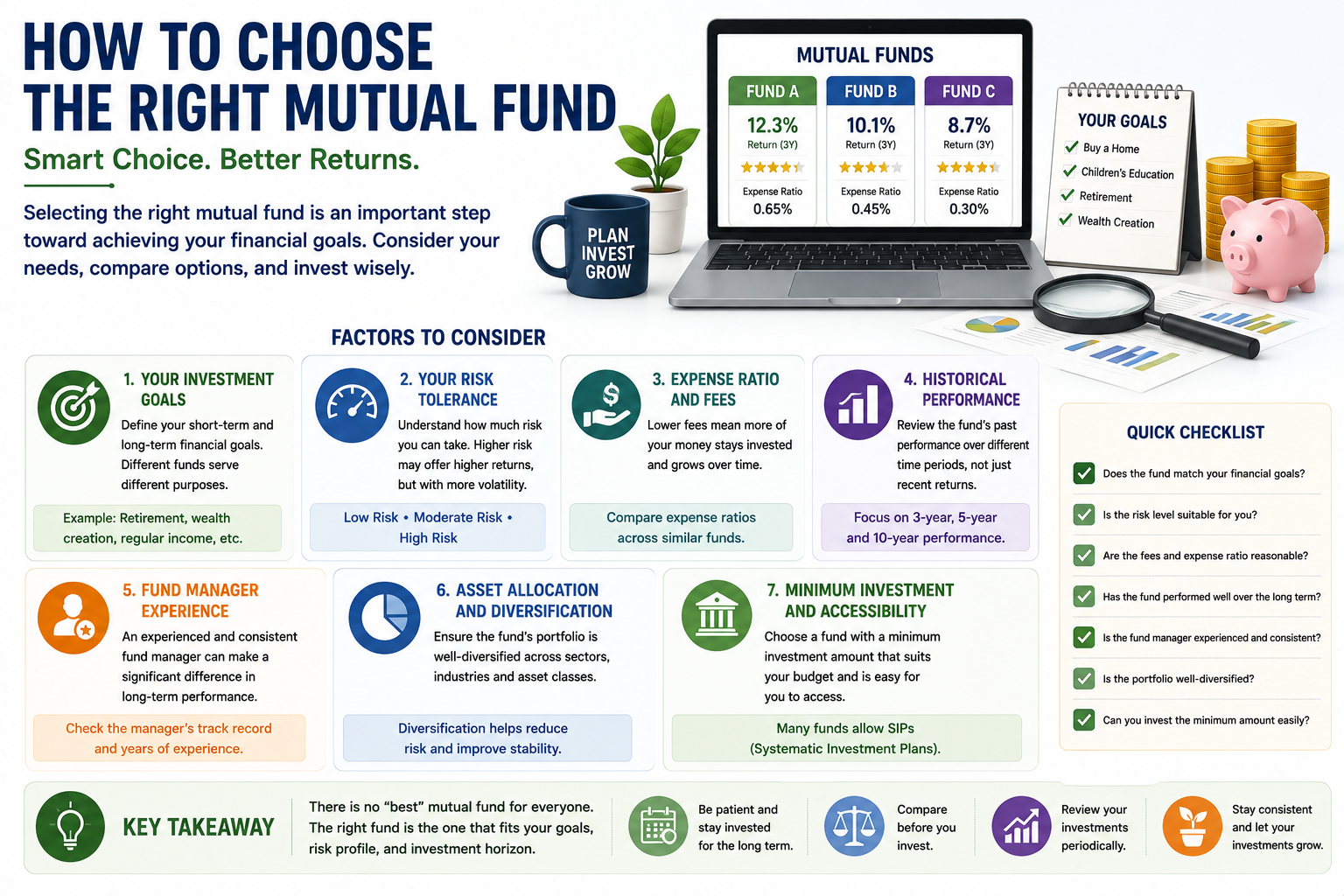
Selecting the right mutual fund depends on your investment goals, financial situation, time horizon, and willingness to accept risk. There is no single fund that is suitable for everyone.
Instead of chasing the highest recent returns, compare funds based on their long-term performance, investment strategy, fees, diversification, and consistency.
Factors to Consider
- Your investment goals
- Your risk tolerance
- Expense ratio and fees
- Historical performance
- Fund manager experience
- Asset allocation
- Minimum investment amount
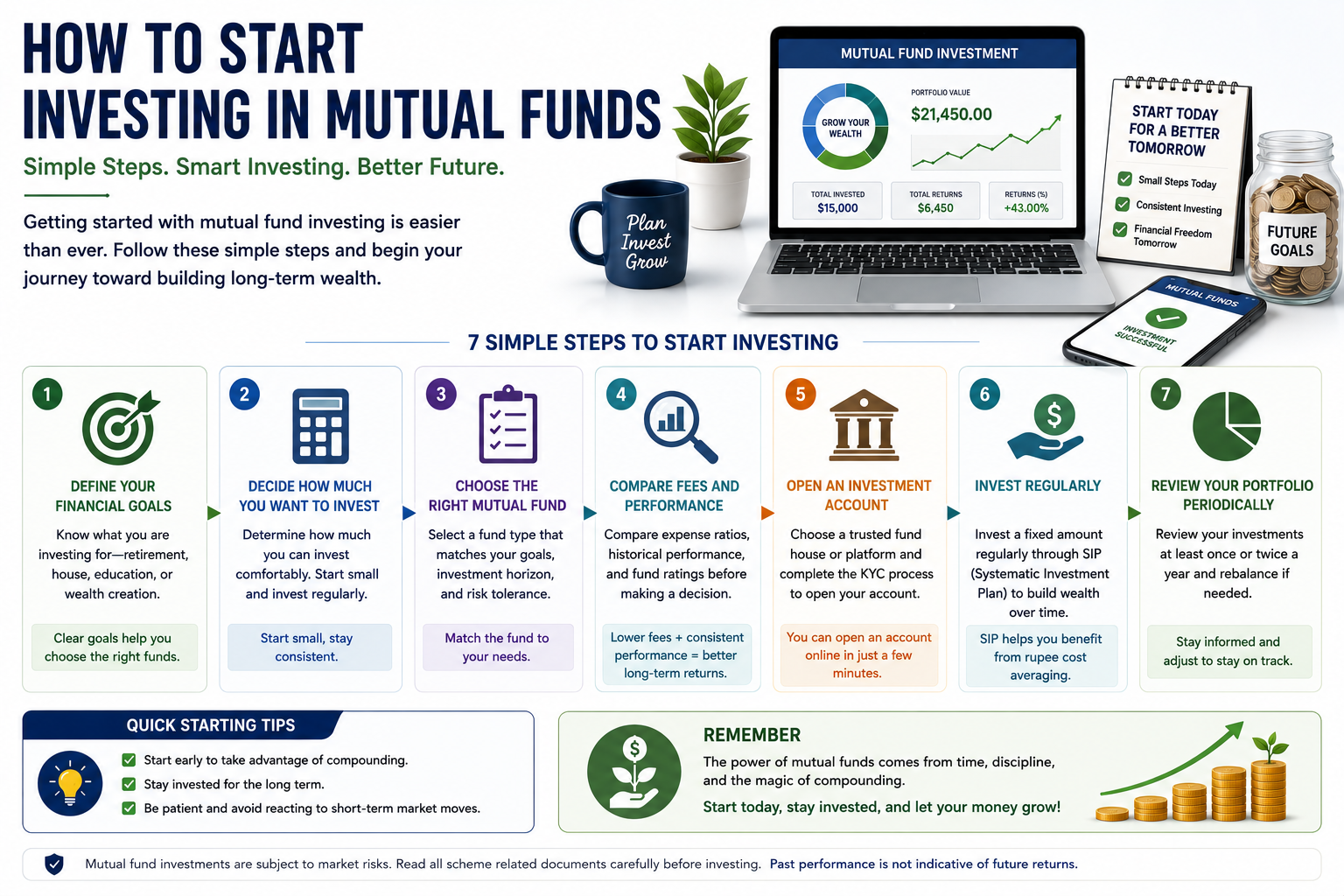
How to Start Investing in Mutual Funds
Getting started with mutual fund investing is easier than ever. Many investment platforms allow beginners to open an account online and begin investing with relatively small amounts of money.
Simple Steps
- Define your financial goals.
- Decide how much you want to invest.
- Choose the appropriate type of mutual fund.
- Compare fees and performance.
- Open an investment account.
- Invest regularly using dollar-cost averaging if possible.
- Review your portfolio periodically.
Common Mutual Fund Investing Mistakes
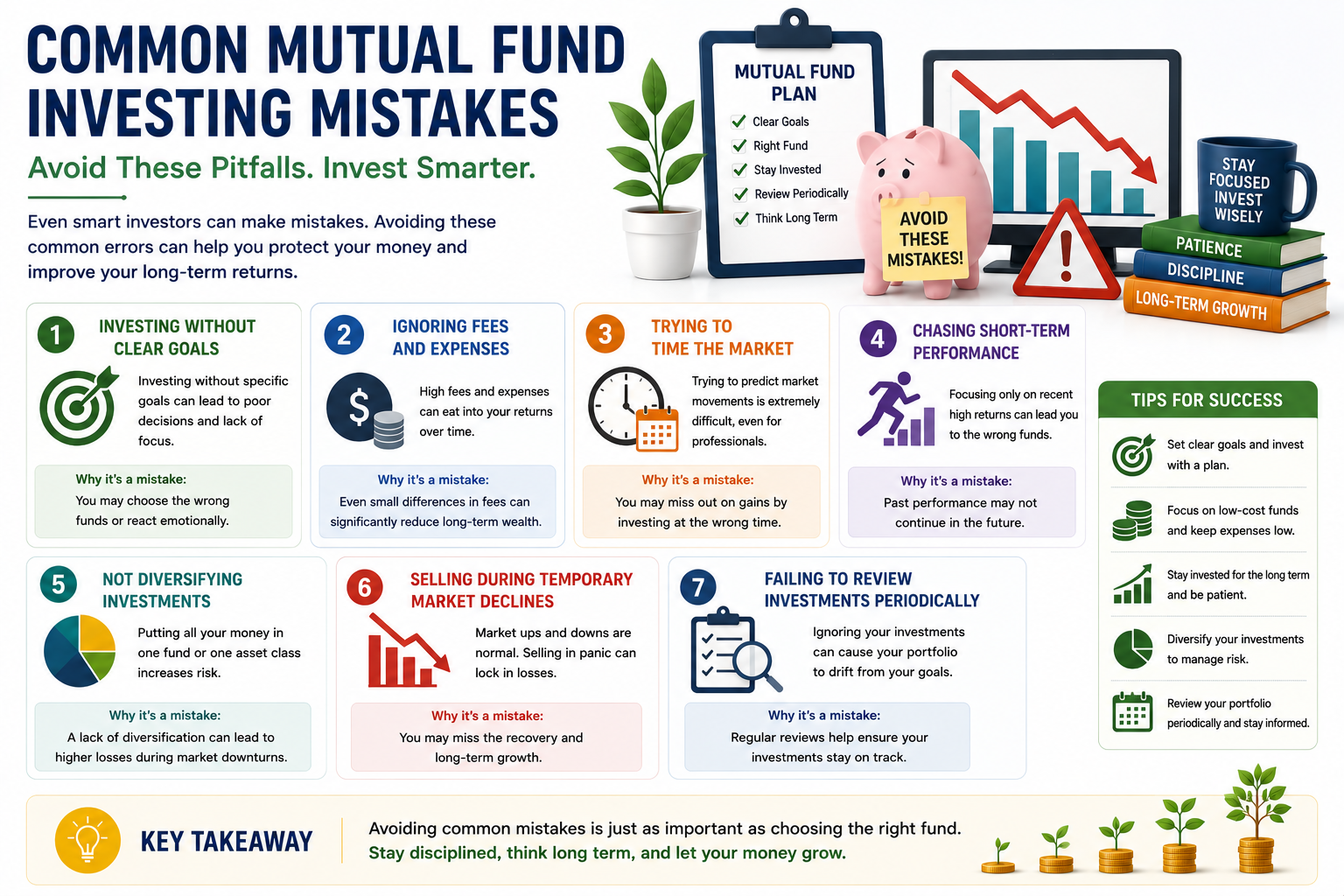
Many investors make avoidable mistakes that reduce long-term returns. Staying disciplined and focusing on your long-term investment plan can help improve your chances of success.
Avoid These Mistakes
- Investing without clear financial goals
- Ignoring fees and expenses
- Trying to time the market
- Chasing short-term performance
- Not diversifying investments
- Selling during temporary market declines
- Failing to review investments periodically
Final Thoughts
Mutual funds provide a practical and accessible way for individuals to build diversified investment portfolios under the guidance of professional fund managers. Whether your objective is long-term growth, regular income, retirement planning, or preserving capital, there is likely a mutual fund designed to meet your needs.
Successful investing requires patience, consistency, and a long-term perspective. Understanding how mutual funds work, the fees involved, and the risks you may face can help you make more informed decisions and stay focused on your financial goals.
At Go-Superscribe, our mission is to simplify investing through clear, reliable, and practical educational content. Continue exploring our investing guides to deepen your knowledge and build confidence on your journey toward long-term financial success.
Are you investing in mutual funds, or thinking about getting started? Share your questions, experiences, or tips in the comments below. Whether you're investing for retirement, building long-term wealth, or learning the basics, your insights can help other readers on their investment journey.